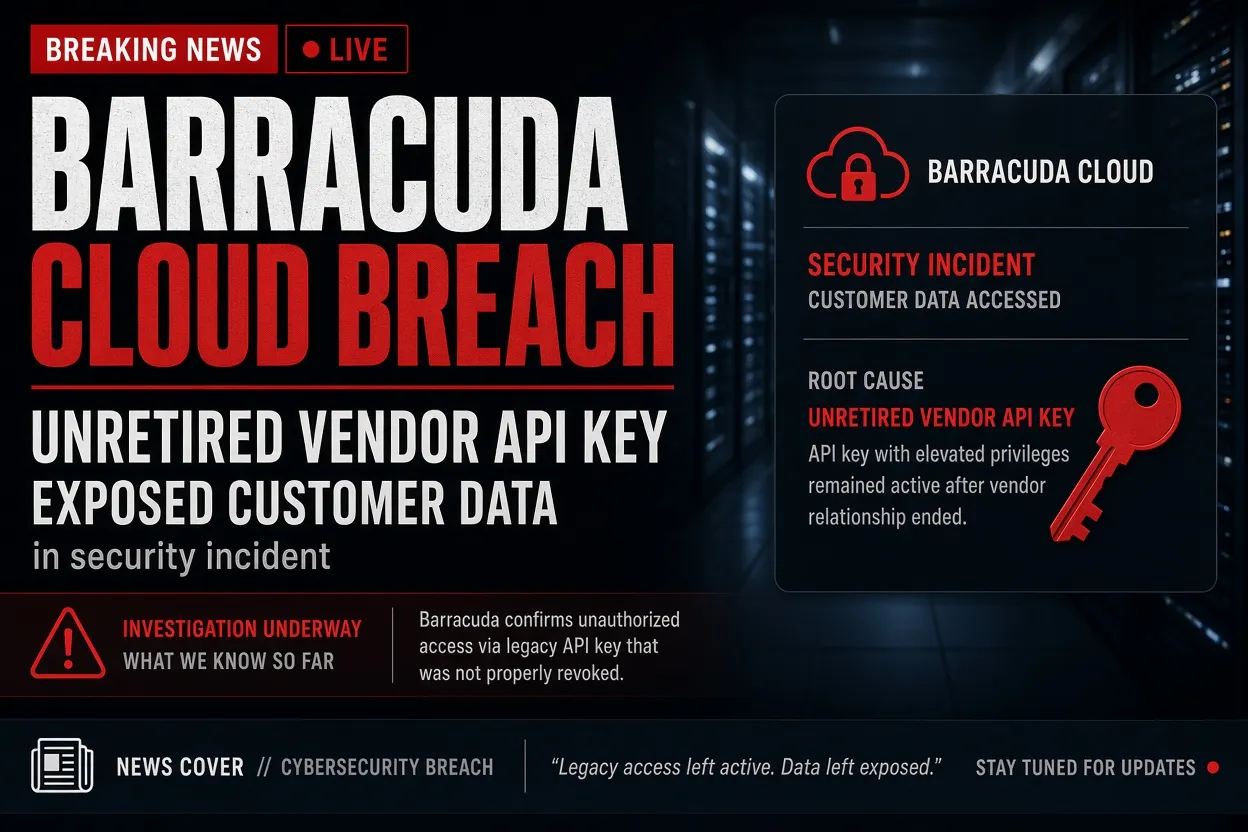
Yes — Barracuda Networks disclosed unauthorized activity in portions of its cloud environment in early November 2026. In its November 11 blog post, Barracuda says the attacker entered with a valid cloud access key issued to a third-party AI vendor for a past project — and that Barracuda did not retire the key when that work ended. Barracuda attributes compromise of the vendor’s development environment in October as the likely place the key was stolen.
The intrusion is not a Texas-only story and does not change whether Barracuda Email Gateway or spam filtering works in your inbox today. The lesson for small businesses and MSPs is vendor access hygiene: long-lived cloud and API keys are standing invitations, and machine-speed toolchains can chain secrets faster than a human SOC can ticket them.
BleepingComputer summarized the incident on November 16, 2026, including Barracuda’s statement that the key sat in a configuration file in the vendor’s GitHub repository. Barracuda’s Trust Center advisory is the customer-facing source for Managed XDR Cloud and Monitored Endpoint integration credential rotation.
This post cites only Barracuda’s published account and trade press. It adds website-tech, blacklist, cybersquat, and CourtListener probes on barracuda.com, plus YubiKey / Google Authenticator grading for Barracuda Cloud Control per public Campus docs.
Snapshot
| Field | Detail |
|---|---|
| Organization | Barracuda Networks (barracuda.com) |
| Customer bulletin | Trust Center — XDR integration credentials (updated after initial publication) |
| Narrative deep dive | Anatomy of a machine-speed intrusion (Nov 11, 2026) |
| Activity window (UTC) | Nov 1, 04:33 — first key use · Nov 2, 23:31 — last recorded activity |
| Scope (cloud accounts) | About 10 cloud accounts in roughly 44 hours |
| Entry | Unretired cloud access key issued to unnamed AI vendor |
| Tooling (behavioral) | Activity consistent with ARTEX — open-source AI-driven pentest framework (July 2026); match describes how, not who |
| Discovery | Engineer-reported unusual activity Nov 4; vendor outreach same day |
| Customer credential access | No direct evidence attacker viewed Barracuda XDR customer integration credentials — insufficient logging to prove non-access; precautionary rotation for some customers |
| Customer action if contacted | Revoke and recreate Managed XDR Cloud or Monitored Endpoint integration credentials per Trust Center steps |
| Customer action if not contacted | Barracuda: no action needed |
| Texas tie | None — national vendor incident |
What Barracuda says happened
Per the November 11 blog and Trust Center page:
- The attacker used the vendor cloud key to read secret stores (for example AWS and Azure service principal material), then chained credentials through a data analytics environment, source-code access, and Kubernetes clusters.
- On November 2, the attacker used short-lived branches to trigger a build workflow that printed encoded secrets into job logs in a way intended to bypass log masking.
- The attacker deployed a read-only container on a Kubernetes cluster to harvest host credentials and tried to create a new cloud administrator identity — blocked.
- Searches on some hosts targeted cryptocurrency wallet paths and environment variables (
WALLET,MNEMONIC,SEED,PRIV, and related patterns). Barracuda says no wallet material existed on those systems. - Barracuda removed the container November 4 (Pacific) and rotated credentials across involved systems.
Barracuda compares the pace and credential-hunting pattern to Railway’s October cloud incident (same blog section). Third-party reporting on AI compute theft is context, not proof of Barracuda’s motive.
Customer integration credentials — state what is confirmed
Barracuda reached a system that stores credentials Barracuda Managed XDR uses to collect telemetry from customer environments (for example Microsoft 365, Google Workspace, and endpoint tools). Barracuda’s investigation found no direct evidence that the attacker viewed or accessed those customer integration credentials. Logging in that environment was not detailed enough to rule access out entirely.
Out of caution, Barracuda identified potentially affected API integration credentials for Managed XDR Cloud or Monitored Endpoint customers and contacted them to revoke and recreate integration credentials with step-by-step guidance. If you have not heard from Barracuda, the Trust Center states no action is needed.
Do not write “Barracuda customer M365 passwords were stolen” based on this disclosure alone.
Why small businesses should care about vendor keys
Even if you do not run Barracuda XDR, the root cause is familiar:
| Risk | Why it matters outside Barracuda |
|---|---|
| Standing cloud keys | A contractor’s AWS or Azure key in a vendor repo can unlock your SaaS tenant if scopes are too broad |
| Forgotten project access | Keys outlive the statement of work; attackers hunt stale secrets in GitHub, IaC state, and backup repos |
| Machine-speed chaining | ARTEX-style agents map and pivot 24/7 — “we’ll rotate next quarter” loses to 44-hour runs |
| Integration credentials | MSP tools and XDR connectors are high value — one key can read mail, endpoints, or identity logs |
Questions to ask any security or email vendor after this week:
- Do you hold long-lived API keys to our tenant? When were they last rotated?
- Which keys are in third-party hands today — and what is the retirement process when a project ends?
- If your environment is compromised, do you assume worst case and rotate customer integration secrets without waiting for proof of exfiltration?
- Can you show scoped credentials (least privilege) instead of org-wide admin tokens?
See also PingCAP’s TiDB Cloud incident for another 2026 vendor story about stolen service credentials and precautionary API-key rotation.
Independent domain audits (admin API)
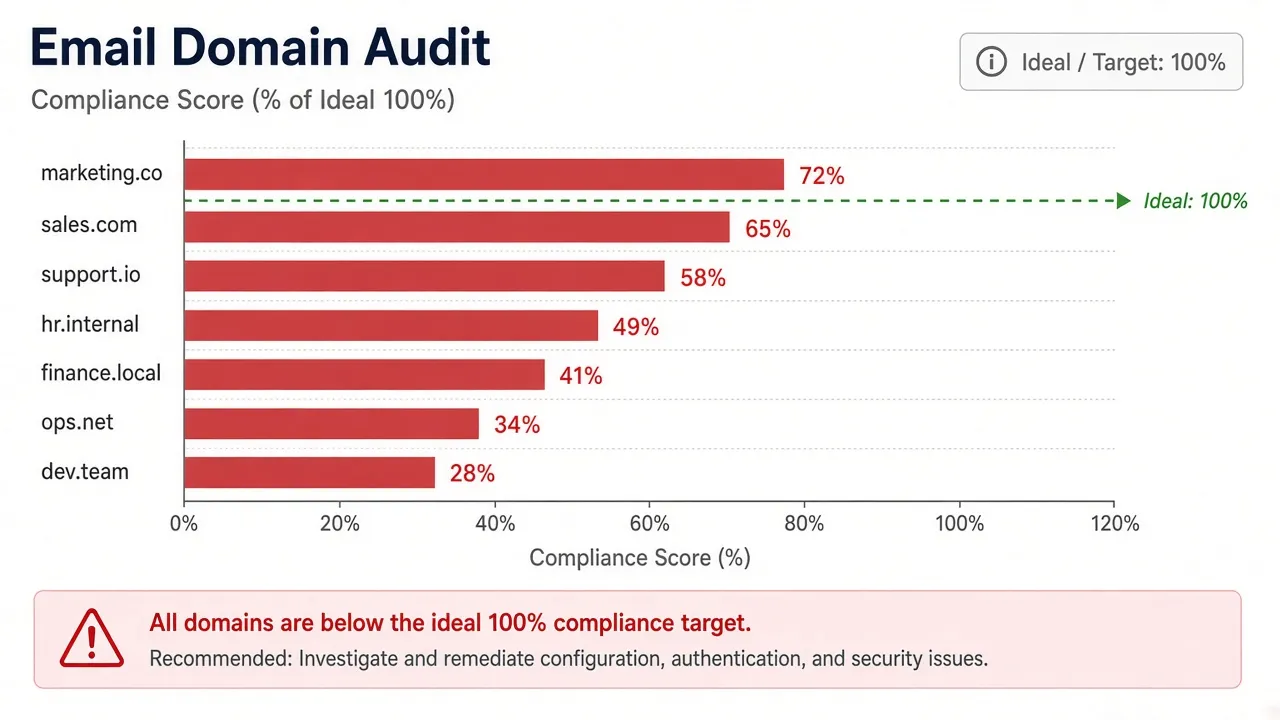
We ran EmailMeNow admin scans on November 17, 2026 via GET https://audit.emailmenow.com/api/admin/scan with scope=full (not the public homepage query form). 100% is the ideal overall domain-security score. 0 of 2 in-scope hosts reach it.
| Organization | Domain | Overall | Gap vs 100% |
|---|---|---|---|
| Barracuda | barracuda.com | 67% | −33 |
| Barracuda Networks | barracudanetworks.com | 57% | −43 |
| Domain | Identity | Transport | Website |
|---|---|---|---|
| barracuda.com | 90% | 15% | 40% |
| barracudanetworks.com | 70% | 15% | 40% |
Both apex domains scored 100% on email infrastructure in this admin pass. The 15% transport gap is the familiar MTA-STS enforcement pattern — relevant because fake “Barracuda security bulletin” or XDR rotation mail still rides weak transport on the brand domain, even though this incident was a cloud control-plane key issue, not SPF/DMARC failure.
These scores measure public authentication, transport policy, and website headers. They do not prove or disprove the vendor-key intrusion or XDR credential exposure.
Re-run your own domain at audit.emailmenow.com (search the domain on the homepage).
Website stack note
Passive website-tech probe on November 17, 2026:
| Domain | Stack signal |
|---|---|
| barracuda.com | Stack undetected (low fingerprint confidence) |
| barracuda.com TLS | DigiCert; Certificate Transparency shows validity into April 2027 at probe time |
Point-in-time only — website fingerprinting does not reflect cloud control-plane compromise.
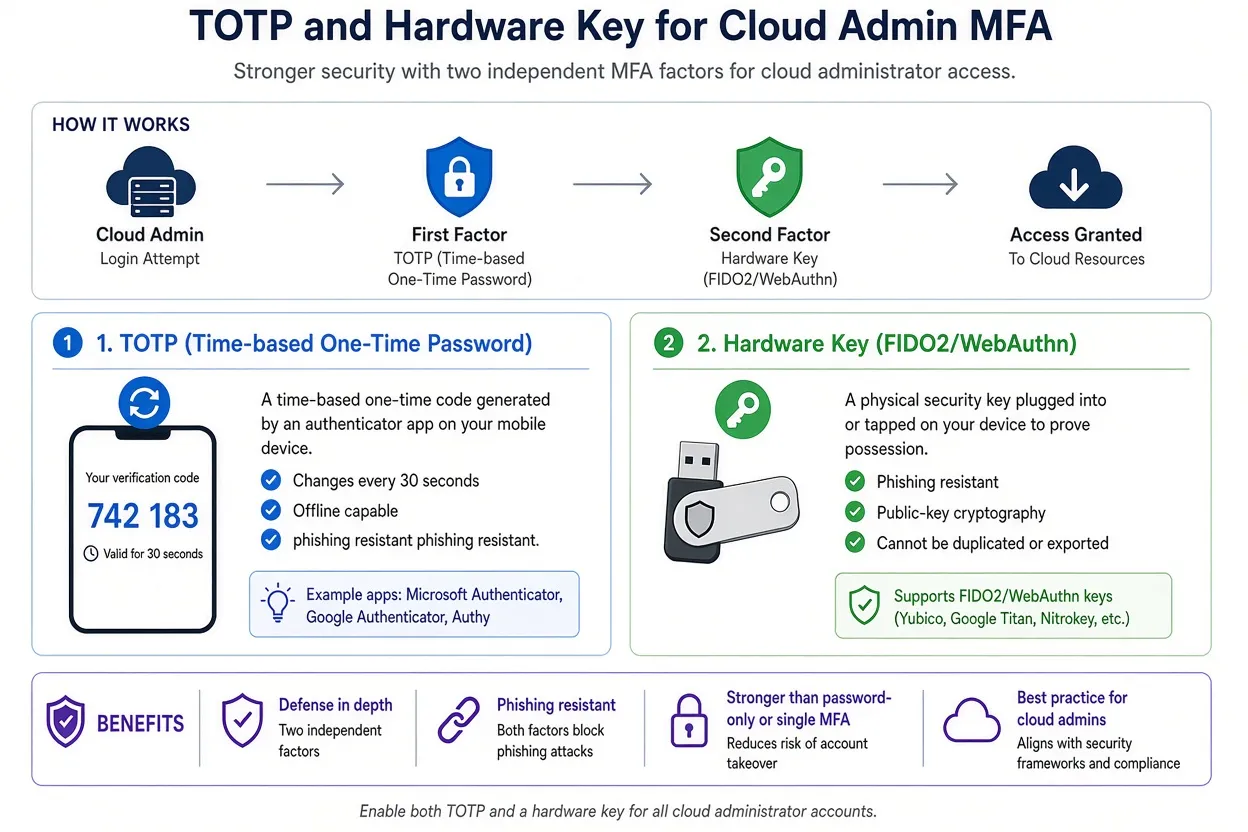
MFA: Barracuda Cloud Control supports Google Authenticator TOTP — not published YubiKey
Barracuda’s consumer and SMB admin path is Barracuda Cloud Control (login.barracudanetworks.com / login.barracuda.com). Campus documentation describes TOTP via authenticator apps:
| Method | Documented for Barracuda Cloud Control? | Grade impact |
|---|---|---|
| Password only | Default when MFA optional | Fail |
| Google Authenticator / open TOTP | Yes — QR or secret key enrollment (Campus MFA setup) | Pass |
| Admin-required MFA for all users | Yes — account administrator can set Required (Campus doc) | Pass when enforced |
| YubiKey / FIDO2 / passkeys | Not documented as a Cloud Control login method in Campus pages reviewed | No Strong path |
| SMS / email OTP | Barracuda Japan customer notice says Cloud Control does not support SMS or email one-time codes for MFA (Barracuda JP) | N/A |
Barracuda Email Security appliances and ESS admin UIs may differ from Cloud Control; this post grades the published Cloud Control login story only.
If you resell or manage Barracuda for clients: require account-wide MFA, register a backup TOTP device, and use Campus one-time user authentication tokens for device loss — not a shared password in a ticket.
Recommended MFA tools (for your firm mail and admin consoles)
Use on systems that document them — enroll Cloud Control TOTP first if you manage Barracuda products.
| Product | Best for | Get it |
|---|---|---|
| YubiKey 5C NFC | USB-C laptops + NFC phones | Amazon |
| YubiKey 5 NFC | USB-A desktops + NFC phones | Amazon |
| Proton Pass | TOTP vault where hardware keys are not offered | Proton Pass |
We may earn a commission if you buy through the links above.
Blacklist, lookalikes, CourtListener
Email blacklist (public DoH, November 17, 2026): barracuda.com — clear on mail/domain lists we can query. SPFBL notes on web/CDN IPs (76.223.34.124, 13.248.160.137) are shared-edge noise — do not lead news copy on them.
DNS lookalike scan (barracuda.com, standard profile, November 17, 2026):
| Metric | Count |
|---|---|
| Lookalikes to review | 28 |
| Likely Barracuda-owned redirects | 1 (barracuda.ai → www.barracuda.com) |
| BEC staging (MX, no website) | 3 |
| Lookalike | Technique | Note |
|---|---|---|
| barracud.com | Omission | BEC staging (MX) |
| barraucda.com | Transposition | BEC staging (MX) |
| barrracuda.com | Duplication | BEC staging (MX) |
| www-barracuda.com | Phishing-host pattern | Registered — treat links as hostile |
| barracuda-secure.com | Affix | Registered — investigate before trust |
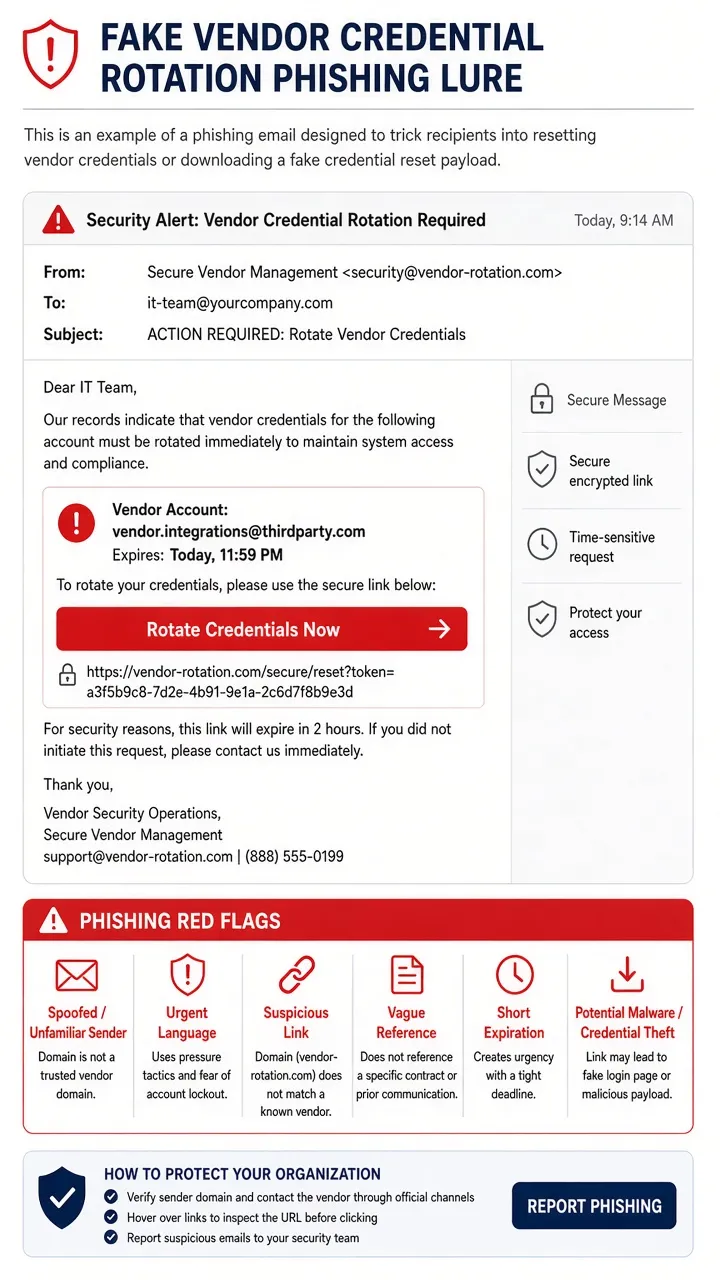
After vendor incidents, criminals send fake “rotate your XDR API key” or “Barracuda security bulletin” messages. Type barracuda.com or use bookmarks — not lookalike TLD swaps.
CourtListener
Federal RECAP search for “Barracuda Networks data breach” on November 17, 2026 returned no matching dockets filed after 2026-11-01. Older unrelated “Barracuda” token matches in the index are not this cloud intrusion. No lawsuit paragraph is warranted at publish time.
What to do this week
If Barracuda contacted you about Managed XDR or Monitored Endpoint:
- Follow Trust Center steps to revoke and recreate integration credentials — use only URLs from that advisory or Barracuda support, not unexpected email.
- Review which M365 / Google / endpoint scopes those integrations held; treat the rotation as a chance to narrow permissions.
- Watch integrated identity logs for new OAuth consents or unfamiliar service principals after rotation.
If you were not contacted:
- Barracuda’s public position: no action required — still a good week to audit your own third-party cloud keys.
- Inventory every API key in GitHub, CI logs,
.envfiles, and vendor tickets; delete keys for finished projects. - Prefer short-lived workload identity over multi-year access keys where your cloud provider allows it.
- Run a domain audit at audit.emailmenow.com and review monitoring services.
Everyone:
- Do not panic-forward unverified “Barracuda breach” screenshots — cite Barracuda’s blog or Trust Center.
- Enable MFA on Cloud Control if you administer Barracuda products — TOTP is documented; do not wait for the periodic “Important Security Update” nudge.
- Ask MSPs whether your integration secrets sit in their vaults and when those keys last rotated.
Related reading
- FBI FLASH on ARTEX — ConnectWise Cloud Backup supply chain
- PingCAP TiDB Cloud — stolen credentials and API-key precaution
- Beazley Q2 2026 — agentic AI and credential theft trends
- MFA directory — YubiKey, TOTP, passkeys
- Government & education breaches tracker (contrast — this is vendor cloud, not an OAG row)
- Cybersquat Domain Monitoring
Sources: Barracuda blog — machine-speed intrusion (Nov 11, 2026) · Barracuda Trust Center — XDR integration credentials · BleepingComputer (Nov 16, 2026) · Barracuda Campus — MFA setup · Barracuda Campus — admin-required MFA · Barracuda JP — MFA message (SMS not supported) · EmailMeNow admin audits (scope=full) November 17, 2026 · website-tech, blacklist, and cybersquat probes November 17, 2026 · CourtListener November 17, 2026
Check your domain free at audit.emailmenow.com, add Domain Watch ($29/mo) to catch spoofed vendor security mail, or see automated reports and monitoring.